October 2026
Why Freediving Beats Snorkeling And Scuba
I've done all three. Snorkeling keeps you on the surface, scuba constrains you in multiple ways, and freediving sets you free.
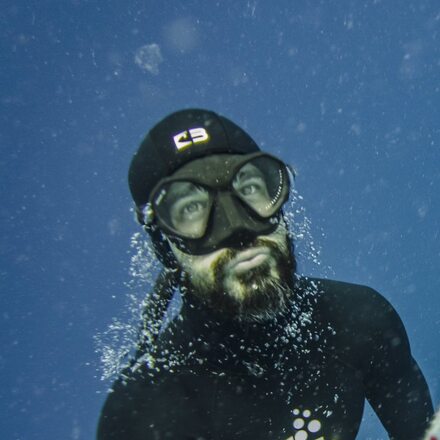
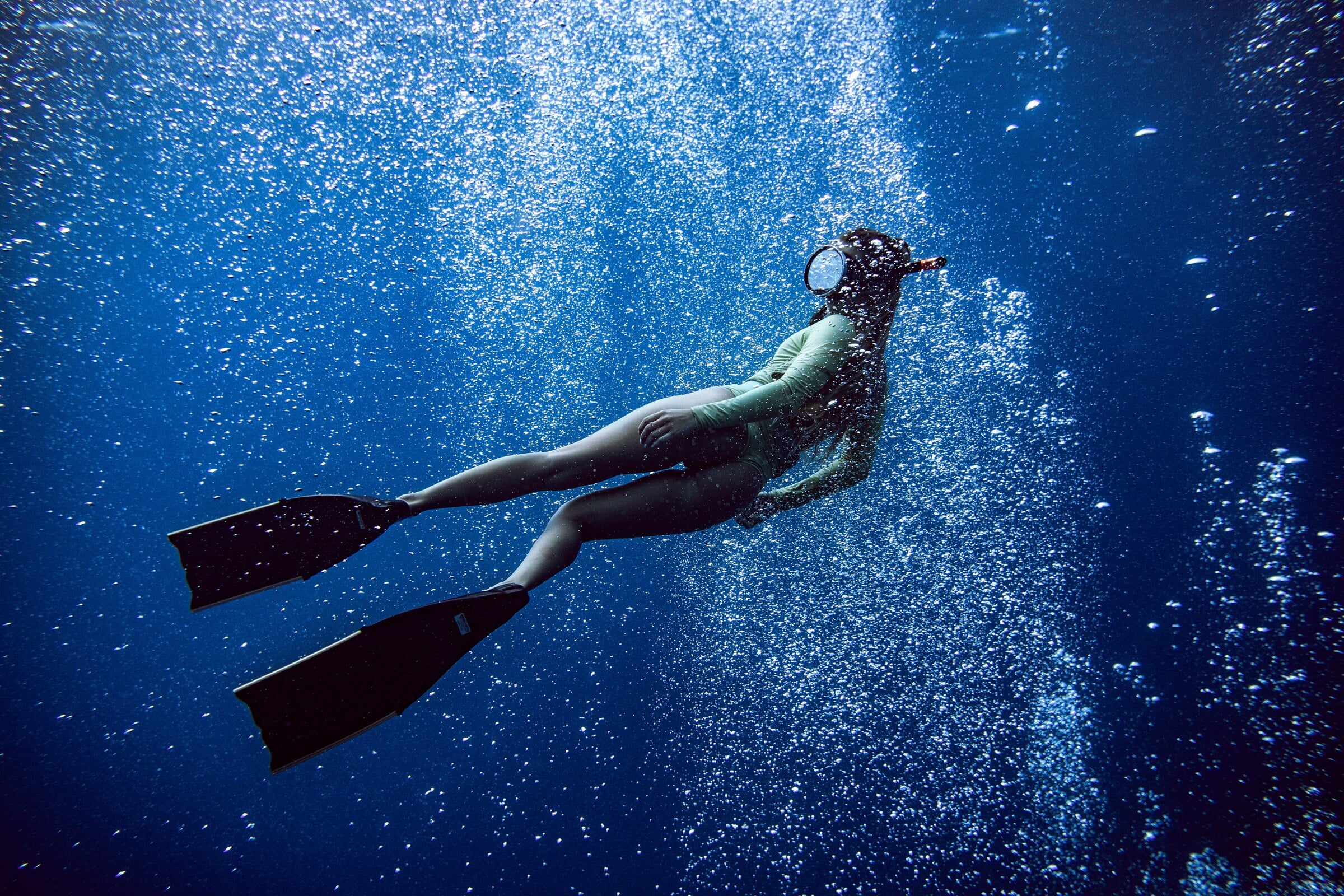
My mother threw me in the ocean. Not a joke; that's how I learned to swim. At eight years old I was snorkeling over an absolutely majestic coral garden in Bermuda, and I fell in love with the ocean rather permanently.
I didn't know freediving was a thing, so when I wanted more, I did what everyone does: I got scuba certified. It was sixty pounds of gear, a cloud of bubbles, and all for the feeling of being a clumsy guest in the ocean.
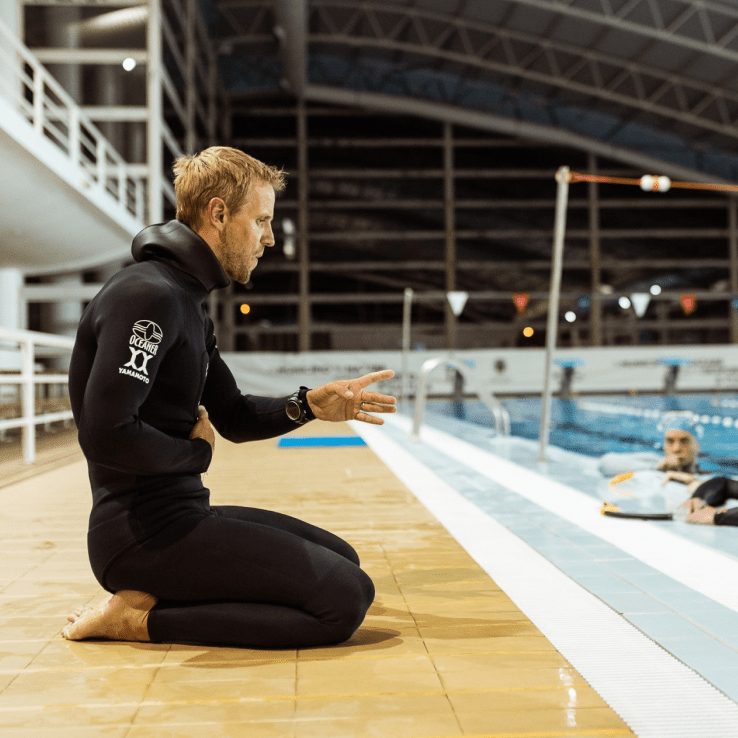
Then I took my FII Level 1 freediving course, and it felt like someone had flipped a switch inside me and turned me into Aquaman. I went on to train as an instructor under Martin Stepanek, the first human to dive past 400 feet on a single breath, and I never looked back.
So, I've done all three. Each one took me further into the ocean, and each one has its limits. Let me give you my honest thoughts about them.
Snorkeling: Leaning Against The Wall
I love snorkeling. If you're reading this, you probably do too, and for good reason: Put on a mask and you're doing it. No course, no prerequisites, super beginner friendly, and less to pack than anything else here. That's its gift.
That's also about as far as snorkeling can take you.
Snorkeling is like only ever looking at the side of a forest and never walking in. It's leaning against the wall at the school dance. The music is playing, everyone is out there, and you're watching.

Here's what the surface costs you:
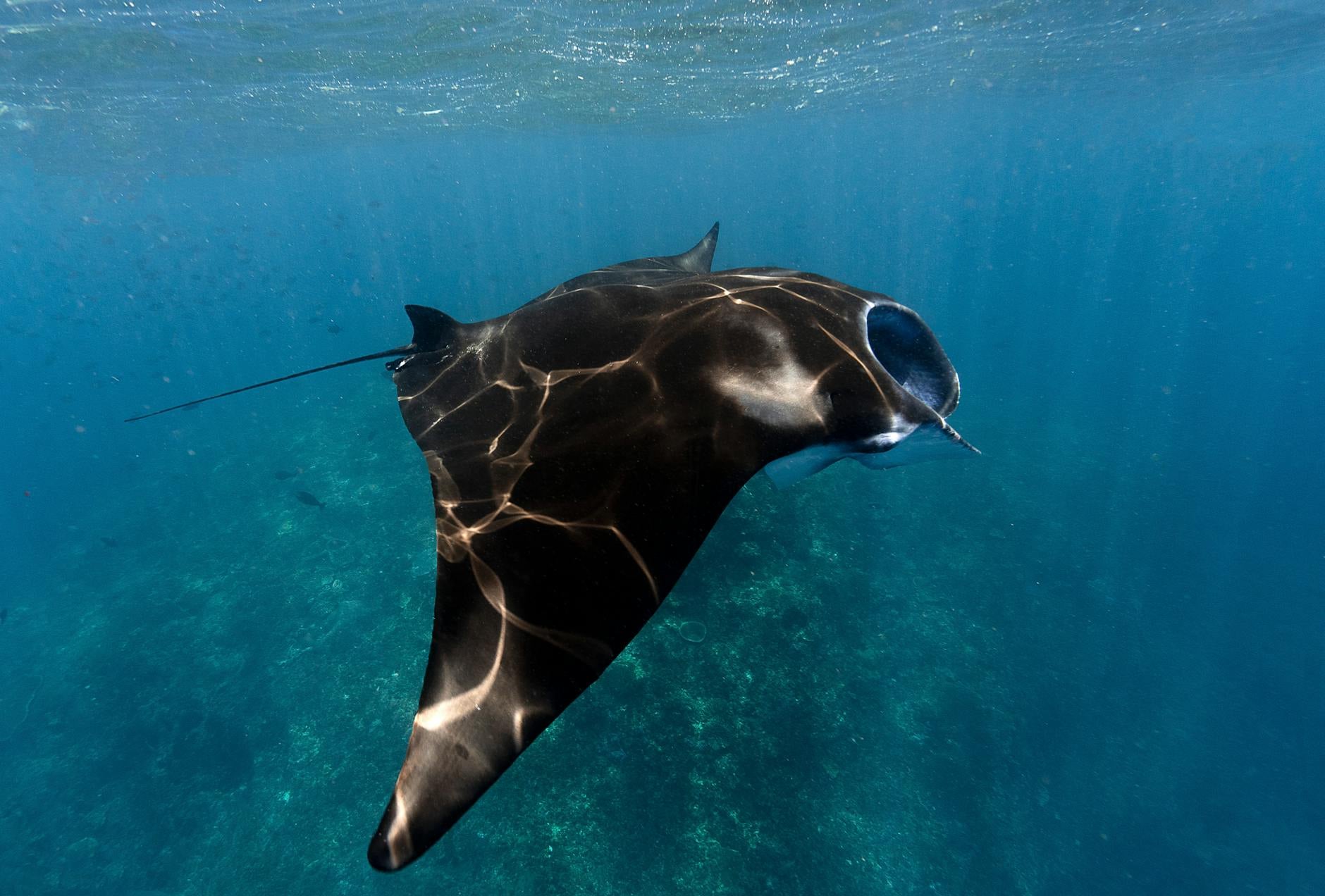
- Top-down views only. The manta, the turtle, and the sea lion are all below you. You are basically looking at their backs the whole time. You never meet the wildlife eye to eye.
- Most of the ocean is out of reach. The swim-through, the deck of a shipwreck, the inside of a kelp forest. You can't reach any of those. You'll never hear the whale songs.
- More rigid limits. Many tours put you in a life vest or hand you a floating rig to hold, which pins you to the surface. On the manta night dive in Kona, the snorkelers hold the rig the whole time while the mantas dance beneath them (click here to see the manta rays from a freediver's perspective).
And here's the thing: Freediving is the natural next step after snorkeling. It's like leveling up your snorkeling skills and equipment to experience a whole new underwater world.
Scuba: Sixty Pounds Between You And The Ocean
Scuba gets one thing right, and I'll give it its due: Uninterrupted time at depth. In my years as a scuba diver, a dive ran 25 to 40 minutes without coming up once. If you want to sit still in one spot for half an hour, scuba does that.
Everything else about scuba is limiting.

- The gear. Fifty to sixty pounds of it: A tank, a vest, a regulator, a weight belt. You either haul it through airports or rent it every time and breathe through a mouthpiece hundreds of people have used before you. Yuck.
- The course is about the gear. Scuba training teaches you to run the equipment. None of it teaches you about the remarkable machine you already are, the way freediving education does. Scuba training is also longer and more cumbersome.
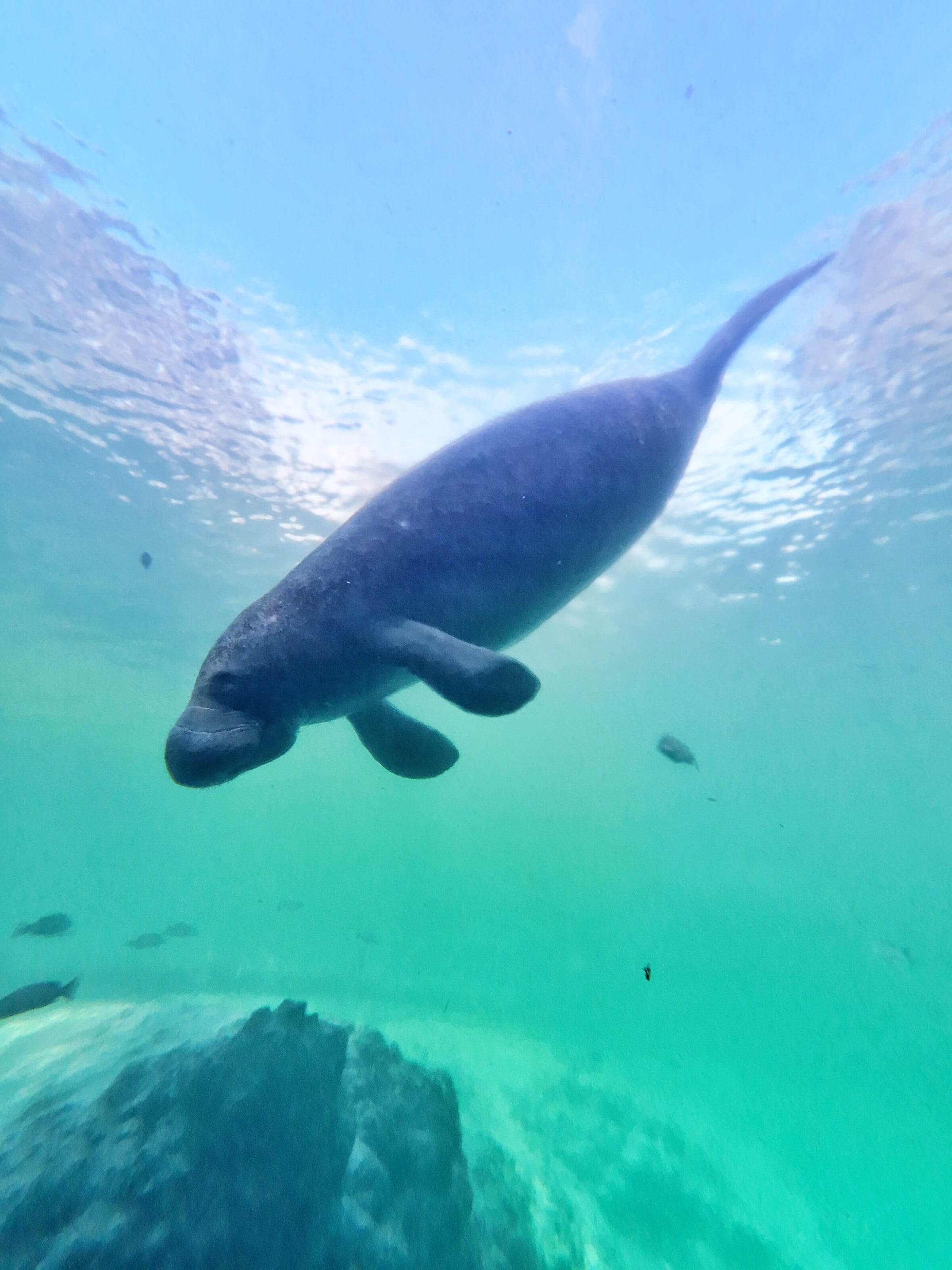
- The bubbles. Every breath out is a burst of noise, and shy species, like manatees, many fish, and even sharks, keep their distance. When researchers in Guam surveyed reefs on bubble-free rebreathers instead of scuba, they counted 48% more species of fish.
- You can't talk. There's a regulator in your mouth, so all you have are hand signals and frantic pointing. The turtle swims off, and you save the story for the boat 40 minutes later, when half of it has faded. With scuba you dive near other people, not really with them.
- The tank and the dive plan decide. You watch a gauge instead of the reef, and the dive ends when the air says so, not when you're done. Your depths are set before you get wet too. You can't swim up or down quickly without safety risks. Plus, there are required safety stops on the ascent.
- The surface intervals and flying limits. Nitrogen builds up in your body, so you wait an hour or more between dives, and you can't fly for at least 12 hours, usually double that.
- The grace, or the lack of it. With a tank on your back and a vest full of air, you're a slow, bulky object. A clumsy guest in the ocean. With freediving, the ocean is where you belong.
Freediving: You Are A Marine Mammal
Here's what nobody told me when I was eight: You were born with an aquatic superpower. Every human has a mammalian diving reflex, the same one whales, dolphins, and seals use. Hold your breath and put your face in the water, and your body starts to change. Your heart slows (a little in most people, far more in trained freedivers), blood shifts toward your heart and brain, and your spleen can squeeze extra red blood cells into circulation.
That's freediving: Diving on a single breath, the way the Ama of Japan and the sponge divers of ancient Greece have done for thousands of years. No tank. No bubbles. Nothing between you and the water.
For the first time in the ocean, I felt like I belonged. That's the real difference. You're not a visitor in a machine. You are a marine mammal, exploring the ocean the way they do, with the same reflex they have.
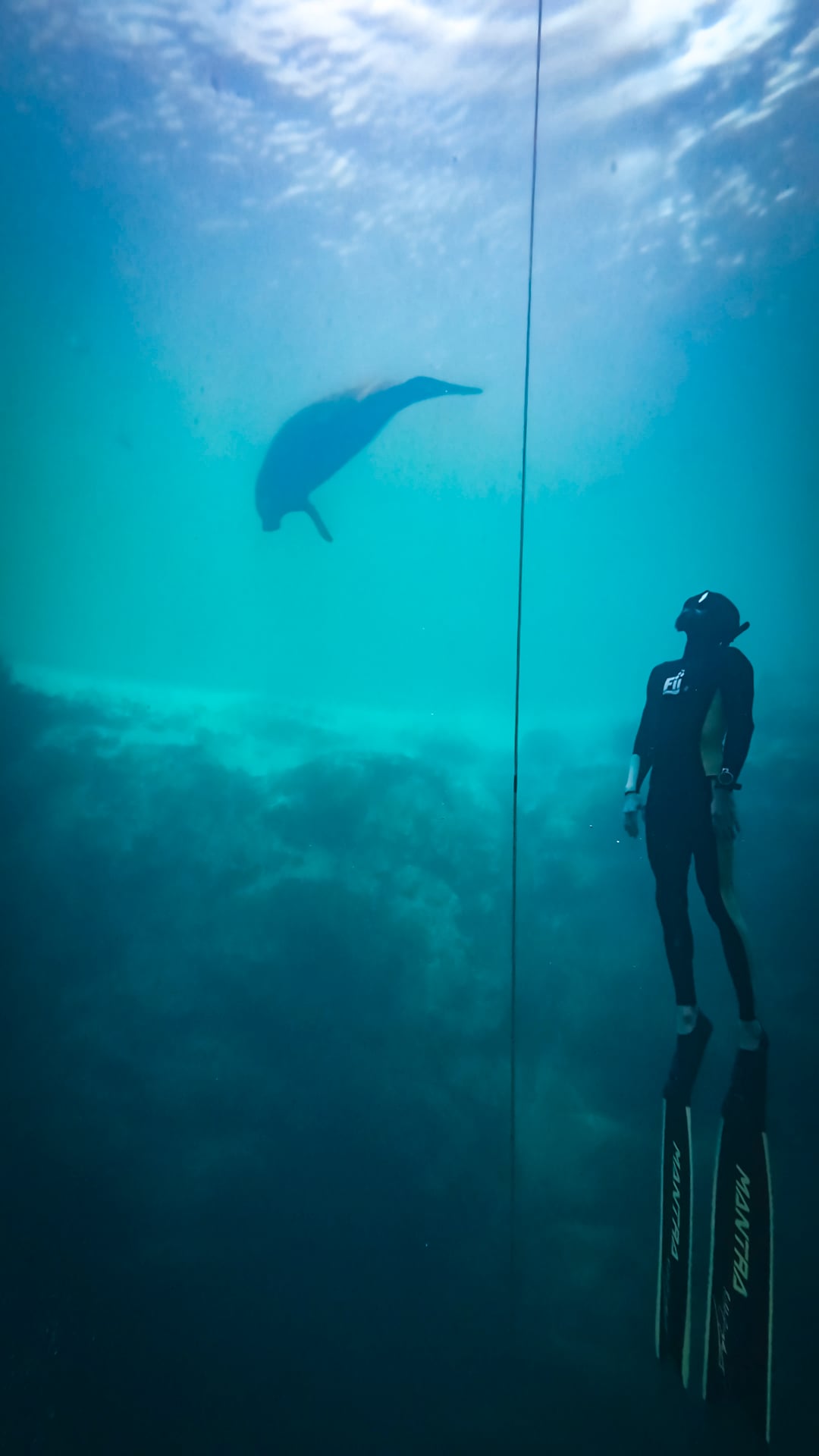
- Freedom. Take a breath, go down, come up, breathe, go again. A new depth every dive. Follow the turtle, drop to the sand, rise along the wall, swim through the arch. A session can be dozens of dives, each one wherever you want it. The ocean is your home.
- Silence. No bubbles, no regulator. The wildlife stays, and you meet it on its level. You can actually hear the whale songs (an unforgettable experience for me).
- It's social. Every dive ends at the surface next to your buddy, so every breath is a chance to say, "Woah! Did you see that dolphin?!" You share it while you're still buzzing, then go back down for more. In this way scuba is very much solo, where freediving is social, fun, and freeing.
- The calm. As your heart slows, your mind follows. My students often say it feels like meditation.
- "How did I do that?!" That's what one guest said after reaching 20 meters on a single breath. Your first freediving class can take you to 66 feet (20 meters) deep.
- It packs almost like snorkeling. Longer fins, a wetsuit, and a weight belt are the only additions. I bring my own custom-fit gear on every dive trip.
- A door to everything else. Spearfishing, underwater photography, competition, pearl diving, sponge diving, and more. With freediving the whole ocean opens up.
One rule never bends: You never freedive alone. Every dive has a trained buddy watching, ready to help, and that's what makes freediving done right so safe. It's the foundation of everything we do. Click here to learn about freediving safety.
Side By Side
Here are all three at a glance.
| Snorkeling | Scuba | Freediving | |
|---|---|---|---|
| How Deep | The surface | 60 ft (Open Water) | 66 ft (Level 1) |
| What You Pack | Mask, snorkel, fins | 50 to 60 lb, or rentals | Mask, snorkel, fins, wetsuit, belt |
| To Learn | Nothing | 4-day technical course | 2-day course on your own body |
| Time Under | None | 25 to 40 minutes | One breath, again and again |
| How You Move | Across the top | Slowly, by the plan | Movement freedom |
| The Wildlife | Top-down only | Shy ones keep away | Eye to eye |
| Sharing It | Lift your head and talk | Hand signals, then the boat | Every breath up |
| Flying Home | Anytime | Wait 12 to 24 hours | None for dives under 20 meters |
| What It Unlocks | More snorkeling | Deep wrecks, tech diving | Spearfishing, competition, and more |
Get In There
Snorkeling showed me the ocean. Scuba took me into it as a visitor. Only freediving gave me a sense of belonging in the underwater world.
If you love snorkeling, you're already at the edge of the dance floor. The music is playing. The mantas are dancing. Let's get you in there!
Learn more about our Bespoke Aquatic Adventures and Private Courses.
More Stories